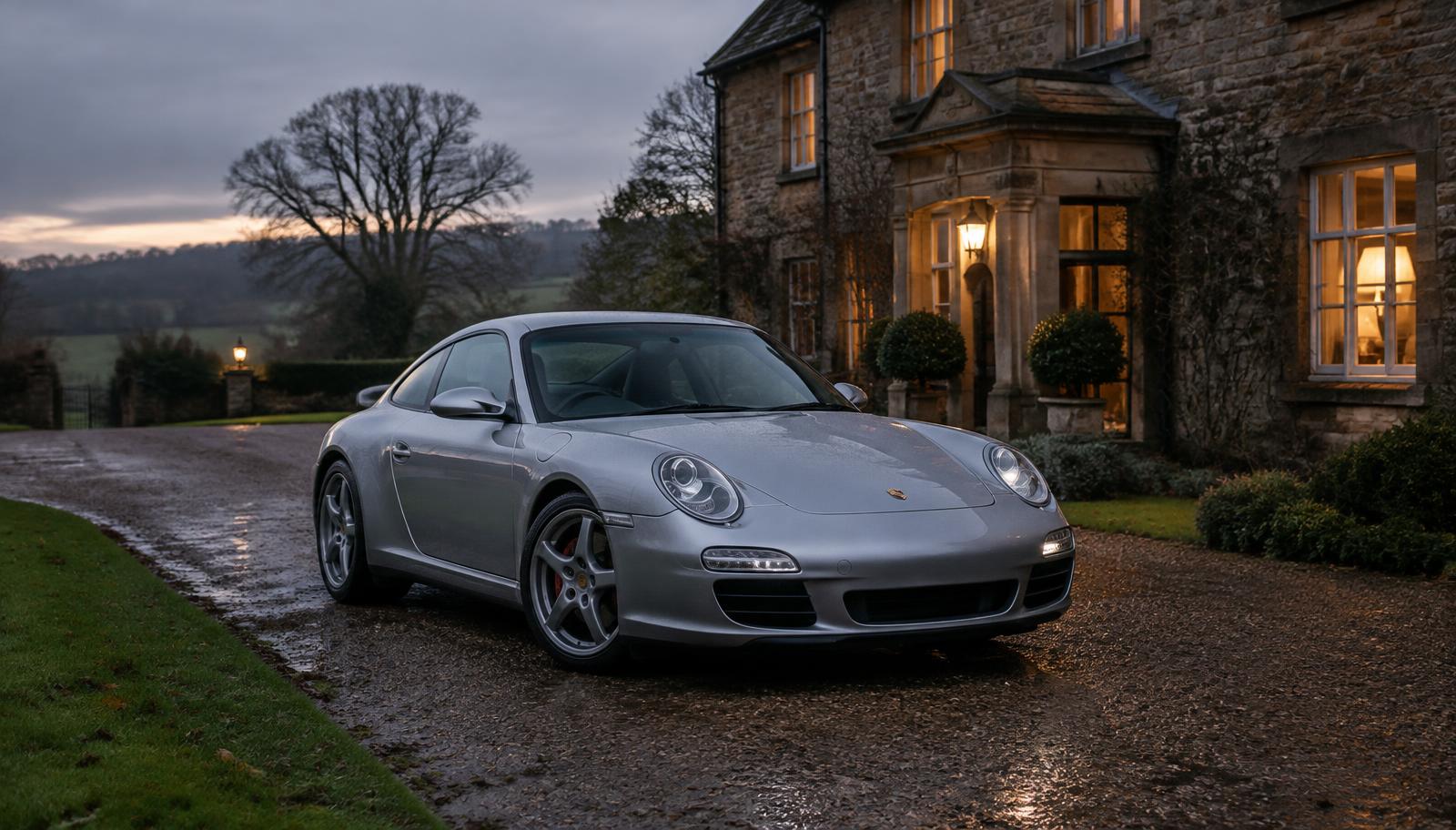
There is a familiar conversation that takes place among Porsche enthusiasts towards the end of the year.
Annual bonuses are approaching, savings have accumulated, and the idea of putting some of that money into a Porsche 911 starts to feel increasingly attractive.
After all, certain air-cooled 911s are worth considerably more than they were fifteen years ago. Manual water-cooled models are attracting renewed interest, and some limited-production Porsches have achieved extraordinary prices at auction.
So, rather than leaving money sitting in the bank, why not buy something you can enjoy that might also appreciate in value?
It is an appealing proposition. But the reality is more complicated.
At 2911, our view is straightforward: buy a Porsche because you want to own and drive a Porsche. If you choose the right car, buy it at a sensible price and maintain it properly, strong residual value can become a significant additional benefit.
Buying a 911 purely as a financial investment, however, is a different proposition altogether.
Heading into 2027, there are some particularly interesting opportunities across the used Porsche 911 market. Certain generations have established strong collector demand, others offer compelling value relative to their original purchase prices, and several remain underappreciated for the driving experience they deliver.
The challenge is separating genuine long-term desirability from auction hype, unrealistic asking prices and speculative buying.
Is a used Porsche 911 a good investment in 2027?
A used Porsche 911 can be a relatively strong value-retaining sports car, particularly when purchased at the right point in its depreciation cycle. Air-cooled models, desirable manual variants, limited-production derivatives and exceptionally well-maintained examples tend to attract stronger enthusiast and collector demand.
However, appreciation is not guaranteed. Servicing, repairs, insurance, storage, inflation and selling costs can outweigh any increase in the car's market value.
For most buyers, the strongest financial argument for purchasing a used Porsche 911 is not the prospect of making a profit. It is the opportunity to enjoy an exceptional sports car while potentially experiencing less depreciation than many comparable performance vehicles.
I'm not a financial advisor, and a Porsche should not be treated as a guaranteed alternative to conventional investments.
The best Porsche purchase is often one that delivers years of enjoyment without an unnecessarily expensive ownership experience.
That is a very different definition of a successful investment.
What is happening in the used Porsche 911 market heading into 2027?
The used Porsche market should not be treated as one homogeneous market.
A 1992 Porsche 964 Carrera 2, a 2001 Porsche 996 Carrera and a 2015 Porsche 991.1 GTS attract different buyers, carry different mechanical considerations and sit at different points in their depreciation cycles.
The exceptional prices achieved by rare GT models, Speedsters and air-cooled Turbos can also create a misleading impression of the wider market.
Just because a particularly rare 911 achieves a record auction result does not mean an ordinary Carrera has appreciated by the same percentage.
As of November 2026, several market observations are worth considering:
Established air-cooled models continue to benefit from collector interest, although individual values fluctuate.
Desirable manual 997.2 models occupy an increasingly interesting position between classic and modern Porsche ownership.
The naturally aspirated 991.1 GTS has distinctive appeal among enthusiasts who prefer the character of earlier engines.
The 996 and early 997 Carrera remain relatively accessible entry points into genuine 911 ownership.
Mechanical condition, specification and documented maintenance can create substantial price differences between otherwise similar cars.
Exceptional asking prices do not necessarily translate into completed sales.
Analysis of British auction results between October 2024 and October 2026 published by Skiddmark identified a median sale price of £17,150 for the 996 generation and £23,750 for the 997 generation. These figures cover a mixture of specifications and conditions, but they illustrate how accessible certain water-cooled 911s remain relative to newer models.
SkiddMark
Meanwhile, UK specialist dealer listing data published in November 2026 indicates that manual 911s command an average asking-price premium of approximately 9% over comparable automatic versions of the same age and variant. That is an asking-price observation, not a guaranteed resale premium.
Vertar
The market is increasingly rewarding the right individual cars rather than every Porsche carrying a 911 badge.
Which used Porsche 911 generations hold their value best?
The Porsche 964 and 993 are among the most established value-retaining 911 generations because of their air-cooled engines, historical significance and enduring collector demand.
Among water-cooled models, manual 997.2 Carreras, particularly desirable GTS variants, and the naturally aspirated 991.1 GTS offer compelling enthusiast appeal.
The 996 and early 997.1 Carrera represent more accessible opportunities for buyers seeking relatively mature depreciation profiles without paying established collector-car premiums.
| Porsche generation | Market position heading into 2027 | Principal attraction | Main ownership consideration |
|---|---|---|---|
| 964 | Established modern classic | Air-cooled engine and traditional proportions | Age-related restoration and mechanical costs |
| 993 | Established collector favourite | Final air-cooled 911 generation | High entry price and condition-sensitive values |
| 996 | Accessible enthusiast opportunity | Lightweight, analogue driving experience | Engine condition and deferred maintenance |
| 997.1 | Mature depreciation, attractive entry point | Traditional styling and hydraulic steering | Bore scoring, IMS considerations and ageing components |
| 997.2 | Strong modern-classic credentials | Revised engine architecture and traditional driving character | Higher purchase premium for desirable specifications |
| 991.1 GTS | Distinctive modern enthusiast appeal | Naturally aspirated 3.8-litre flat-six | Specification, maintenance and purchase price |
| 991.2 | Modern performance and usability | Turbocharged performance in Carrera variants | Ongoing market depreciation exposure |
| 992 | Contemporary ownership proposition | Modern technology and performance | Greater exposure to conventional depreciation in many standard models |
This is a qualitative assessment of desirability and ownership economics, not a prediction of future appreciation.
GT3, GT2, RS, Turbo and other specialist derivatives operate within their own market segments and should not be valued exclusively against ordinary Carrera models.
Porsche 964: Has the air-cooled investment opportunity already happened?
Porsche 911 Type 964
1988 to 1994 production generation
Air-cooled character, compact dimensions and unmistakable classic 911 styling.
There was a time when the 964 was considered an ageing Porsche that sat awkwardly between earlier classic 911s and the more refined 993.
That perception has changed considerably.
Today, the 964 appeals to enthusiasts who appreciate its traditional silhouette, air-cooled flat-six and relatively compact proportions.
It has also become a popular foundation for high-end restomod projects, further increasing interest in the generation.
Hagerty's published US valuation research reported that average 964 values within its assessed category increased by 69% over a five-year period leading into its 2025 analysis. That demonstrates the scale of historical reappraisal, although US valuation performance should not be directly applied to UK cars.
hagertyagent.com
Which Porsche 964 models are particularly desirable?
The manual Carrera 2 Coupé remains an especially attractive proposition for buyers seeking the traditional rear-wheel-drive 911 experience.
Other sought-after derivatives include the Carrera RS, Turbo models and unusual factory specifications.
However, rarity alone is not enough.
A 964 with significant corrosion, questionable restoration work or an undocumented engine rebuild can represent a considerably greater financial risk than a more ordinary but properly maintained example.
What should buyers consider heading into 2027?
The 964 has already undergone a substantial collector-market reappraisal.
Buying one today is not equivalent to buying one before that appreciation occurred.
A meaningful proportion of its desirability is already reflected in current prices.
The strongest purchase rationale is therefore ownership enjoyment combined with the potential for resilient residual values, rather than assuming another dramatic period of appreciation.
For buyers who appreciate classic Porsche engineering, the 964 remains an exceptional car.
For buyers hoping to double their money simply by keeping one in a garage, expectations should be considerably more restrained.
Porsche 993: The enduring appeal of the final air-cooled 911
Porsche 911 Type 993
1993 to 1998 production generation
The final air-cooled 911, combining classic engineering with improved refinement.
The 993 occupies a position within Porsche history that no subsequent generation can replicate.
It was the final production generation of the air-cooled 911.
That historical significance has helped establish enduring international demand, particularly for well-preserved manual Coupés and desirable wide-bodied derivatives.
The Carrera S, Carrera 4S, Turbo and RS variants each have their own enthusiast following.
However, the 993's reputation can sometimes lead buyers to underestimate the importance of mechanical condition.
These cars are now approaching or exceeding thirty years of age.
Even a low-mileage example can require substantial work involving suspension, oil leaks, air-conditioning systems, brakes, seals and age-related deterioration.
An apparently immaculate car with limited documented maintenance may conceal considerable future expenditure.
Is the Porsche 993 still a good investment?
The 993 offers established collectability and a historically important place within the Porsche lineage.
That makes it an attractive proposition for enthusiasts who want to own a classic 911 with relatively strong long-term desirability.
However, its established market premium reduces the opportunity to purchase one before its collector appeal is recognised.
The question is less whether the market will discover the 993 and more whether the individual car justifies its existing valuation.
Originality, mechanical provenance and the quality of previous maintenance become particularly important at this level.
A well-documented standard Carrera may be a more financially sensible purchase than a neglected example of a rarer derivative.
For additional market context, the Hagerty Porsche 993 buying guide provides useful information about the generation's variants and ownership considerations.
Porsche 997.2: One of the most compelling modern-classic 911s heading into 2027
The second-generation 997, commonly referred to as the Gen 2 or 997.2, occupies a particularly interesting position in the used Porsche market.
Produced from 2008 to 2012, depending on model and derivative, it combines traditional 911 proportions with a more modern engine architecture, improved usability and a driving experience that remains distinctly analogue by contemporary standards.
For many enthusiasts, it represents a particularly attractive balance between classic Porsche character and everyday practicality.
The introduction of the revised 9A1 engine architecture in Carrera models also removed the traditional intermediate shaft bearing arrangement associated with earlier water-cooled Carreras.
Although no ageing Porsche is entirely immune from mechanical problems, the Gen 2 addresses several of the concerns that influence purchasing decisions around earlier models.
Why manual 997.2 models are increasingly desirable
The manual 997.2 Carrera and Carrera S possess several characteristics that enthusiast buyers value:
Naturally aspirated flat-six engines.
Six-speed manual transmissions.
Hydraulic power-assisted steering.
Relatively compact exterior dimensions.
Traditional 911 styling.
Modern enough for regular use without excessive technological complexity.
These characteristics are becoming less common collectively in newer performance cars.
That does not mean every manual 997.2 will appreciate. However, it provides a credible explanation for why particularly good examples continue to attract enthusiast interest.
The Porsche 997.2 GTS
The Carrera GTS, introduced towards the end of the 997 generation, deserves particular attention.
With its 408 PS naturally aspirated 3.8-litre engine, wider bodywork and distinctive factory specification, it occupies a desirable position between the Carrera S and more focused GT models.
A well-specified manual GTS Coupé represents a particularly appealing combination of characteristics for enthusiast ownership.
However, buyers should remain disciplined about the premium they are prepared to pay.
An excellent Carrera S purchased at a sensible price may deliver better overall ownership economics than a GTS purchased at an inflated collector valuation.
The more desirable the derivative, the more important it becomes not to overpay for that desirability.
For a detailed breakdown of both generations, read our Porsche 997 Buyer's Guide.
Porsche 991.1 GTS: The appeal of the last naturally aspirated Carrera GTS
The first-generation 991 Carrera GTS represents another particularly interesting proposition heading into 2027.
Introduced in 2014, the 991.1 GTS features a naturally aspirated 3.8-litre flat-six producing 430 PS, alongside a distinctive combination of performance equipment and styling.
When Porsche introduced the updated 991 generation in 2015, the Carrera and GTS powertrains moved towards turbocharged engines. This makes the 991.1 GTS the final naturally aspirated Carrera GTS generation to date.
Porsche Newsroom+2
That distinction matters to buyers who particularly enjoy the throttle response, progressive power delivery and soundtrack of a naturally aspirated Porsche.
Why the 991.1 GTS has long-term enthusiast appeal
Unlike some more specialist Porsche derivatives, the GTS offers an attractive combination of performance, usability and character.
It is sufficiently refined for longer journeys, sufficiently engaging for enthusiastic weekend driving, and distinctive enough to appeal to owners seeking something beyond a standard Carrera.
Several characteristics support its desirability:
| Characteristic | Why enthusiasts value it |
|---|---|
| Naturally aspirated 3.8-litre flat-six | Distinctive engine response and soundtrack |
| 430 PS output | Strong performance without requiring a GT3 |
| GTS-specific factory specification | Clear differentiation from standard Carrera models |
| Manual or PDK transmission | Appeals to different driving preferences |
| Wide-body styling | Strong visual identity |
| Everyday usability | Broader ownership appeal than more focused track-oriented derivatives |
Should you buy a manual or PDK 991.1 GTS?
From a traditional collector perspective, a well-specified manual Coupé may have particularly strong appeal.
However, PDK is an excellent transmission and suits the character of the 991 exceptionally well.
A correctly maintained PDK GTS with excellent provenance can be a more sensible purchase than a manual example with an inferior history, questionable bodywork or substantial deferred maintenance.
The gearbox should be part of the purchasing decision, not the entire purchasing decision.
If you intend to use your Porsche regularly, buy the transmission you actually prefer driving.
Will the 991.1 GTS appreciate in 2027?
There is a credible long-term desirability argument for the 991.1 GTS.
However, its future market performance remains uncertain, and much of its distinctive appeal is already recognised by buyers.
It should be regarded as an interesting value-retention candidate rather than a guaranteed appreciating asset.
Porsche 996: The most accessible route into genuine 911 ownership?
The Porsche 996 has spent much of its existence living in the shadow of the air-cooled generations that preceded it.
Its departure from traditional round headlights, transition to water cooling and widely discussed engine concerns contributed to a lengthy period of relatively subdued market values.
But those characteristics have also helped create one of the most interesting value propositions in the used Porsche market.
A good 996 delivers a genuine rear-engined, flat-six Porsche driving experience at a purchase price that remains considerably more accessible than many later generations.
Its relatively modest dimensions, direct driving character and traditional manual gearbox options give it qualities that are increasingly appreciated.
Has the Porsche 996 reached the bottom of its depreciation curve?
Many ordinary 996 Carrera models have already experienced substantial conventional depreciation.
That makes them attractive to buyers who want to minimise their exposure to the steep depreciation commonly associated with newer sports cars.
However, there is no guaranteed price floor.
An inexpensive Porsche can become cheaper still if significant mechanical problems emerge or market demand weakens.
British auction results from October 2024 to October 2026 show a wide range of achieved 996 values, with the middle 80% of recorded sales falling between approximately £10,500 and £36,000. The variation reflects different derivatives, specifications and conditions.
SkiddMark
This demonstrates both the opportunity and the danger of purchasing exclusively on price.
Which Porsche 996 models deserve attention?
| Model | Principal attraction |
|---|---|
| Early 996.1 Carrera 2 manual | Lightweight character, distinctive early specification and traditional driving experience |
| 996.2 Carrera manual | Updated styling and larger 3.6-litre engine |
| 996 Carrera 4S | Turbo-inspired wide-body styling and distinctive rear design |
| 996 Turbo | Exceptional performance and different engine architecture |
| 996 GT3 | Motorsport-derived engineering and established enthusiast appeal |
The Turbo and GT3 occupy different market segments from ordinary Carrera models, with different mechanical considerations and acquisition costs.
For buyers primarily interested in enjoying Porsche ownership while managing financial exposure, a properly maintained Carrera can make a compelling case.
The mechanical risks you cannot ignore
A 996 purchase requires an understanding of the relevant engine and ownership considerations.
Depending on the particular model, these may include:
Intermediate shaft bearing concerns.
Cylinder bore scoring and other cylinder-related issues.
Rear main seal oil leaks.
Cooling system deterioration.
Radiator and condenser corrosion.
Suspension wear.
Clutch condition.
Exhaust corrosion.
Age-related electrical issues.
These concerns should be investigated proportionately rather than used as a reason to dismiss the entire generation.
A properly inspected 996 with documented specialist maintenance remains a very different proposition from an apparently cheap example with unknown mechanical condition.
Read our Porsche 996 Buyer's Guide for a more detailed assessment of the generation.
Porsche 997.1: The overlooked value sweet spot
While the Gen 2 attracts increasing enthusiast attention, the first-generation 997 remains particularly interesting for buyers seeking strong driving enjoyment relative to their initial expenditure.
The 997.1 returned the 911 to more traditional styling, retained hydraulic steering and offered naturally aspirated flat-six engines in Carrera derivatives.
For many enthusiasts, it captures the familiar appearance and driving characteristics they associate with a modern Porsche 911.
However, its reputation is influenced by two well-documented mechanical considerations: intermediate shaft bearing concerns and cylinder bore scoring in relevant Carrera engines.
These issues affect the financial case for ownership.
Why the cheapest 997.1 is rarely the best-value 997.1
Consider two hypothetical Porsche 997.1 Carrera S examples.
| Purchase consideration | Porsche A | Porsche B |
|---|---|---|
| Purchase price | £24,000 | £29,000 |
| Specialist inspection | £500 | £500 |
| Immediate servicing and maintenance | £2,500 | £500 |
| Additional engine-related remedial work | £10,000 | £0 |
| Total initial ownership expenditure | £37,000 | £30,000 |
The cheaper car ultimately requires £7,000 more initial expenditure.
These figures are illustrative rather than current repair quotations. Actual engine repair costs depend on the damage, engine specification, rebuild scope and specialist undertaking the work.
Purchase price versus true initial ownership cost
Two hypothetical Porsche 997.1 Carrera S purchases
Porsche A: The apparently cheaper car
£37,000
Porsche B: The better-prepared car
£30,000
Purchase price
Inspection and initial maintenance
Engine remedial work
Additional initial expenditure on the cheaper car
£7,000
Hypothetical comparison. Neither car represents an actual 2911 stock vehicle or customer purchase.
The purchase price is only the beginning of the financial relationship you have with a Porsche.
A better-maintained car may cost more to acquire but considerably less to own.
Is a rebuilt Porsche engine a reason to walk away?
Not necessarily.
A professionally rebuilt engine, supported by detailed invoices from a reputable Porsche engine specialist, can be a positive attribute.
The important questions are:
Why was the engine rebuilt?
Who performed the work?
What components and cylinders were addressed?
Which engineering solutions were used?
Is there detailed supporting documentation?
How has the car been maintained since the rebuild?
The words engine rebuilt in an advertisement tell you very little without the supporting evidence.
A comprehensive, properly documented rebuild is fundamentally different from a limited repair undertaken to resolve an immediate symptom.
For further guidance, explore our articles on Porsche bore scoring and IMS bearing considerations.
How much should you budget for a used Porsche 911 in 2027?
The following ranges provide an illustrative UK shopping budget for selected enthusiast-oriented derivatives heading into 2027.
They are intended as broad starting points, informed by late-2026 UK market observations and specialist buying guides, rather than live valuations or independently calculated transaction averages.
| Porsche model | Indicative shopping budget | Ownership proposition |
|---|---|---|
| 996 Carrera | £15,000 to £30,000 | Accessible analogue 911 ownership |
| 997.1 Carrera / Carrera S | £20,000 to £35,000 | Traditional styling and mature depreciation |
| 997.2 Carrera / Carrera S | £30,000 to £55,000 | Modern-classic balance |
| 997.2 GTS | £50,000 to £85,000+ | Desirable late-generation derivative |
| 991.1 GTS | £65,000 to £100,000+ | Modern naturally aspirated performance |
| 964 Carrera | £45,000 to £90,000+ | Established air-cooled appeal |
| 993 Carrera | £45,000 to £90,000+ | Final air-cooled generation |
Exceptional specifications, very low-mileage cars, significant restoration work and limited-production derivatives can sit substantially outside these bands.
Equally, cars requiring considerable expenditure may appear below them.
For context, October 2026 UK listing research placed the typical asking price for the entire 996 generation at approximately £27,000, although that broader dataset also included higher-value specialist derivatives.
Motorcurve
The figures above should not be interpreted as price targets for December 2027 or guaranteed future resale values.
Why Porsche 911 auction prices can give buyers the wrong impression
One of the greatest challenges when researching Porsche 911 appreciation is understanding what published prices actually represent.
Online automotive media frequently highlights exceptional auction results.
A rare GT3 RS achieves a remarkable figure. A low-mileage Carrera sells considerably above expectations. An unusual paint-to-sample specification attracts international attention.
These stories generate headlines because the results are unusual.
They do not necessarily represent the typical ownership experience.
Asking price is not market value
Imagine three seemingly similar Porsche 997.2 Carrera S models.
| Car | Published price | Context |
|---|---|---|
| Porsche A | £48,000 | Dealer asking price |
| Porsche B | £42,000 | Auction hammer price |
| Porsche C | £44,000 | Completed private transaction |
These prices are not directly comparable without understanding the individual vehicles and transaction arrangements.
The dealer's asking price may include vehicle preparation, warranty provision and consumer protections.
The auction hammer price may exclude buyer's fees and subsequent maintenance expenditure.
The private transaction may involve different mechanical condition, documentation and levels of buyer protection.
The relevant financial measure is not simply the published price.
It is the total cost of acquiring a comparable car in an appropriately prepared condition.
Exceptional sales are not representative sales
A rare factory specification, unusually low mileage or exceptional historical provenance can materially influence auction results.
Before applying a headline auction figure to another Porsche, establish whether the cars are genuinely comparable.
Consider their model year, engine, transmission, body style, factory options, mileage, accident history, mechanical condition and documented maintenance.
A market valuation based on the highest-priced example available online is rarely a reliable basis for purchasing or selling a Porsche.
Does Porsche 911 appreciation actually cover ownership costs?
This is the question that separates buying a desirable sports car from making a genuinely profitable investment.
Imagine purchasing a used Porsche 911 for £50,000 and selling it five years later for £60,000.
At first glance, the car appears to have appreciated by £10,000, or 20%.
But that calculation excludes the cost of owning the vehicle.
Illustrative five-year Porsche ownership calculation
| Financial component | Amount |
|---|---|
| Purchase price | £50,000 |
| Eventual sale price | £60,000 |
| Gross appreciation | £10,000 |
| Servicing and mechanical maintenance | (£8,000) |
| Insurance | (£4,500) |
| Vehicle tax and MOT expenditure | (£2,500) |
| Storage and preservation | (£3,000) |
| Selling costs | (£1,500) |
| Total additional ownership expenditure | (£19,500) |
| Net financial result | £9,500 loss |
The example excludes fuel, financing costs, inflation and the potential alternative return on the capital invested.
Although the Porsche increased in value by 20%, its owner experienced an overall financial cost of £9,500 across five years.
That is equivalent to approximately £1,900 per year before the excluded expenses.
From an enthusiast's perspective, owning and enjoying a Porsche 911 at that financial cost might represent an excellent outcome.
From a pure portfolio investment perspective, however, it is not a profitable investment.
Appreciation does not necessarily equal profit
Illustrative five-year Porsche ownership
Increase in vehicle value
+20%
Net financial result
−£9,500
Gross appreciation
£10,000
Additional ownership costs
£19,500
Net financial loss
£9,500
The mistake is measuring ownership success exclusively through the difference between purchase and sale prices.
Porsche 911 investment and ownership cost calculator
Use the following calculator to explore how vehicle appreciation, maintenance, insurance and other ownership costs influence the financial outcome of a Porsche purchase.
The true financial cost of Porsche ownership
Adjust the assumptions to compare potential vehicle appreciation with ownership expenditure.
Porsche purchase price (£)
Ownership period
5 years
Assumed annual change in vehicle value
+4%
−15%
0%
+15%
Annual servicing and repairs (£)
Annual insurance (£)
Annual tax and MOT (£)
Annual storage (£)
Estimated selling costs
2.5%
Assumed annual inflation
2%
Illustrative net financial outcome
-£8,688
Estimated future sale price
£60,833
Total ownership and selling costs
£19,521
Nominal break-even sale price
£69,744
Future sale value in today's money
£55,098
Estimated vehicle value over time
Illustrative vehicle value
Required break-even sale price
Under these assumptions, enjoying the Porsche would represent an average net financial cost of £1,738 per year, excluding fuel, finance and other unmodeled expenses.
Reset assumptionsAll default costs and appreciation rates are hypothetical. Annual expenditure is held constant. The net result is nominal and excludes fuel, finance interest, acquisition fees, opportunity cost and unexpected expenditure beyond the maintenance allowance. Future values are not predictions or 2911 valuations.
Seven factors that determine whether a Porsche 911 will hold its value
The individual car matters at least as much as the generation.
Two apparently identical Porsche 911s can have substantially different values because of differences that are not immediately visible in an online advertisement.
1. Mechanical provenance
Mechanical provenance describes the documented history of a vehicle's maintenance, repairs, inspections and significant engineering work.
A strong provenance file should help a prospective owner understand what has been done, when it was done, who performed the work and whether it was completed appropriately.
A stamped service book is useful, but detailed invoices often provide substantially more information.
For older Porsche models, evidence of important preventative maintenance can be particularly valuable.
2. Original body panels and accident history
Original factory body panels can be an important consideration for collector-oriented Porsche purchases.
However, originality needs to be assessed intelligently.
A documented cosmetic repaint to address stone chips is not equivalent to an extensive repair following a significant accident.
Similarly, a professionally replaced damaged panel is not automatically evidence of a poor car.
The important considerations include structural integrity, quality of repair, consistency of bodywork, originality where relevant, and transparency about previous damage.
A comprehensive inspection may include paint-depth measurements, examination of panel alignment, inspection of structural areas and review of available historical records.
3. Consistent specialist servicing
Porsches require maintenance based on both time and mileage.
A car that has covered only 1,000 miles over several years may still require servicing, fluid changes and replacement of age-sensitive components.
Consistent maintenance by knowledgeable Porsche specialists can support buyer confidence and reduce uncertainty about the car's mechanical condition.
Long gaps in the service history deserve investigation, regardless of how low the mileage appears.
4. Factory specification
Certain factory options and configurations can strengthen resale desirability.
Depending on the model, these may include desirable exterior colours, manual transmissions, sports seats, sports exhaust systems, Sport Chrono packages and other appropriate factory equipment.
However, specification preferences vary between generations and individual buyers.
An unusually specified car is not necessarily a more valuable car simply because it is unusual.
5. Mileage in the context of condition
Mileage matters, but it should never be considered in isolation.
A 65,000-mile Porsche that has been consistently maintained, regularly exercised and carefully inspected can represent a stronger ownership proposition than a 25,000-mile example that has spent years sitting unused.
Low mileage may command a collector premium, particularly on rare derivatives.
That premium needs to be justified by the overall condition, history and intended ownership experience.
6. Appropriate modifications
Modifications can improve the driving experience, but they do not necessarily improve resale value.
Some buyers appreciate documented, reversible upgrades from reputable specialists.
Others prioritise factory originality.
Before purchasing a modified Porsche, establish the quality of the components, installation, engineering rationale and availability of original parts.
The money spent modifying a car is rarely recovered pound for pound when it is sold.
7. The purchase price itself
Even an exceptional Porsche can represent a poor financial purchase if the acquisition price is excessive.
A car's desirability does not eliminate valuation risk.
The strongest purchasing decisions consider recent comparable transactions, mechanical condition, preparation costs, specification and likely resale demand.
You cannot maintain your way out of significantly overpaying for a Porsche.
Why parking a Porsche in a garage is not necessarily a good investment strategy
Some buyers purchase a desirable Porsche and immediately begin worrying about adding mileage.
The car becomes an asset to preserve rather than a machine to enjoy.
For exceptional collector vehicles, careful mileage management and professional preservation may form part of an appropriate ownership strategy.
For many ordinary enthusiast-owned 911s, however, excessive inactivity can introduce additional mechanical considerations.
Cars that sit unused for extended periods may experience deterioration involving:
Batteries and electrical systems.
Tyres and rubber components.
Brake discs and calipers.
Seals and gaskets.
Fuel systems.
Air-conditioning systems.
Moisture-related corrosion.
Storage conditions, preparation and maintenance practices all influence the likelihood of these issues.
Simply placing a Porsche in a garage does not establish that its mechanical condition will remain unchanged.
There is also an important distinction between preserving a vehicle's originality and avoiding using it entirely.
A properly maintained Porsche that is driven regularly, allowed to reach operating temperature appropriately and serviced in accordance with its requirements can deliver years of ownership enjoyment.
The objective should be sympathetic ownership, not necessarily minimum mileage at all costs.
Are classic and used Porsches exempt from Capital Gains Tax in the UK?
Private passenger cars are generally exempt from UK Capital Gains Tax when disposed of as private assets.
This can make privately owned classic and enthusiast vehicles attractive from a tax perspective.
However, different considerations can apply where vehicles are bought and sold as part of a trading activity or used within a business arrangement.
A Capital Gains Tax exemption does not establish that every profit associated with buying and selling cars is free from taxation.
Buyers should consult a qualified tax adviser where appropriate and refer to HMRC's guidance on Capital Gains Tax and private motor vehicles.
The tax treatment also does nothing to eliminate maintenance expenditure, depreciation, insurance costs or investment risk.
A tax-efficient asset is not automatically a profitable asset.
Does buying a Porsche in winter offer better value?
The period between November and February can present interesting opportunities for prospective Porsche buyers.
Seasonal demand can be softer for certain sports cars, particularly Cabriolets and vehicles primarily intended for summer use.
Some owners may be considering selling before another year of insurance, storage and maintenance expenditure.
Others may be preparing to change vehicles before spring.
However, desirable cars with exceptional provenance can attract buyers throughout the year.
There is no universal winter discount.
Waiting for a particular month to purchase a Porsche can also mean missing the right individual car.
The quality of the vehicle, its mechanical history and the appropriateness of the price should take precedence over attempting to time the market perfectly.
If you have been considering purchasing a Porsche with a year-end bonus, establish a complete ownership budget rather than treating the purchase price as your entire available allocation.
Retaining sufficient funds for maintenance and unexpected expenditure can make Porsche ownership considerably more enjoyable.
Which Porsche 911 would we focus on for different ownership budgets?
There is no single Porsche 911 that represents the best purchase for every buyer.
The appropriate choice depends on how the car will be used, the owner's driving preferences and their tolerance for maintenance expenditure.
For buyers seeking accessible Porsche ownership
The Porsche 996 Carrera 2 manual.
A properly maintained example provides a genuine analogue 911 experience without requiring established air-cooled collector-car prices.
Its appeal is primarily the quality of the driving experience relative to the acquisition cost.
The priority should be mechanical inspection and a coherent maintenance history.
For buyers seeking traditional 911 character at a sensible price
The Porsche 997.1 Carrera or Carrera S.
The styling, hydraulic steering and naturally aspirated engine make it an attractive enthusiast proposition.
However, the purchase should be supported by appropriate engine assessment, mechanical inspection and realistic maintenance budgeting.
For buyers seeking a balanced modern classic
The Porsche 997.2 Carrera S manual.
It combines traditional proportions, hydraulic steering, naturally aspirated performance and revised engine architecture.
For many buyers, it represents a particularly attractive balance between usability, enthusiast appeal and potential residual-value resilience.
For buyers seeking a more collectible modern 911
The Porsche 997.2 Carrera GTS or 991.1 GTS.
Both possess distinctive engineering and specification characteristics that appeal to Porsche enthusiasts.
The 997 offers the more compact, traditional driving environment. The 991 offers greater refinement and modern usability.
The appropriate choice depends on the driving experience you prefer and the quality of the individual car.
For buyers seeking established classic Porsche ownership
The Porsche 964 or 993.
These generations offer a distinctive air-cooled ownership experience and established collector appeal.
They also require realistic expectations regarding age-related maintenance, restoration quality and acquisition premiums.
For a broader model comparison, read our guide to the best used Porsche 911 to buy.
What could influence Porsche 911 values during 2027?
Several factors could influence the used Porsche market over the coming year.
| Market factor | Potential effect |
|---|---|
| Interest rates and borrowing costs | Influence financed purchases and discretionary spending |
| Consumer confidence | Affects demand for luxury and enthusiast vehicles |
| Availability of excellent examples | May support premiums for cars with exceptional provenance |
| New Porsche model introductions | Can influence demand for previous-generation vehicles |
| Enthusiast preferences | May strengthen interest in analogue, manual and naturally aspirated cars |
| Maintenance and restoration costs | Can reduce demand for mechanically compromised examples |
| Auction market sentiment | Can influence short-term pricing expectations |
| Wider economic conditions | Affect buyers' willingness and ability to commit capital |
Several of the characteristics enthusiasts value in older 911s are becoming less common in newer vehicles.
However, scarcity does not guarantee increasing demand.
A declining number of excellent examples could support stronger pricing for particularly desirable cars while neglected examples continue to struggle.
The most plausible market distinction is between cars that justify their valuations through condition and provenance and cars that rely primarily on optimistic seller expectations.
Nobody can reliably predict the precise value of an individual Porsche 911 twelve months from now.
The Porsche 911 buyer's investment-quality checklist
Before committing to a Porsche purchase, use the following checklist to assess whether the individual vehicle represents a well-considered ownership proposition.
Porsche purchase readiness checklist
0/12
The purchase price is supported by genuinely comparable cars.
The vehicle has a coherent service history with supporting invoices.
A relevant specialist mechanical inspection has been completed.
Engine condition and model-specific concerns have been appropriately investigated.
Accident history, bodywork and previous repairs are understood.
Mileage is consistent with the available vehicle history.
Factory specification and significant modifications have been verified.
Upcoming servicing, tyres, brakes and other maintenance are budgeted.
A separate financial reserve exists for unexpected repairs.
The intended ownership period is realistic.
The purchase remains affordable without relying on future appreciation.
The car is one you genuinely want to own and drive.
7 essential purchasing considerations remain open.
Resolve these uncertainties before committing to the purchase.
Copy purchasing checklistExplore 2911 Approved PorschesThis checklist is an educational purchasing aid, not a mechanical certification or guarantee of investment performance.
Why buying a 2911 Approved Porsche makes financial sense
When buying a used Porsche, the greatest financial uncertainty often lies in the things you do not know about the individual car.
An attractive advertisement cannot establish engine condition.
A low odometer reading cannot establish maintenance quality.
A collection of service stamps cannot necessarily explain previous mechanical work.
And a competitive asking price cannot tell you how much expenditure will be required after the purchase.
At 2911, our approach is built around carefully selected vehicles, transparent histories, specialist preparation and an understanding of what makes individual Porsches worth owning.
Every car offered within our 2911 Approved stock has been selected under our independent specialist approval process.
Our objective is not to persuade buyers that every Porsche will increase in value.
It is to help them understand the car they are purchasing, its provenance, its condition and the financial realities of ownership.
You can read more about our approach in 2911 Approved vs Porsche Approved: What's the Real Difference?.
For buyers seeking a particular generation, specification or ownership experience, our bespoke sourcing service can also help identify suitable cars beyond those currently advertised.
Sometimes the best Porsche purchase is not the one immediately available.
It is the one worth waiting for.
Frequently asked questions about Porsche 911 investment and appreciation
Is a used Porsche 911 a good investment in 2027?
A carefully selected used Porsche 911 can offer relatively strong residual values and potentially lower depreciation than many comparable sports cars. However, appreciation is uncertain, and ownership costs can outweigh increases in vehicle value. It should primarily be purchased for enjoyment rather than guaranteed financial returns.
Which Porsche 911 generations hold their value best?
The air-cooled 964 and 993 have established collector appeal. Desirable manual 997.2 models, particularly the GTS, and naturally aspirated 991.1 GTS models also possess characteristics that support enthusiast demand. Rare GT and RS derivatives occupy separate collector-market segments.
Will Porsche 911 prices increase in 2027?
Future prices cannot be predicted reliably. Exceptional cars with desirable specifications, strong provenance and excellent mechanical condition may demonstrate resilient values, but wider economic conditions, market demand and individual vehicle condition will influence actual outcomes.
Is the Porsche 996 likely to appreciate?
The 996 has experienced substantial historical depreciation and is attracting greater enthusiast recognition. Desirable, well-maintained manual examples may benefit from increasing interest, but appreciation is not guaranteed and mechanical expenditure can materially affect ownership economics.
Is the Porsche 997.1 a good-value purchase?
Yes, a properly maintained 997.1 can offer an excellent traditional 911 driving experience at a comparatively accessible price. Relevant engine concerns, historical maintenance and upcoming expenditure should be investigated before purchase.
Is the 997.2 a better investment than the 997.1?
The 997.2 has revised engine architecture and established enthusiast appeal, particularly in manual Carrera S and GTS form. However, it generally requires a higher initial purchase price. A carefully selected 997.1 purchased sensibly could deliver better overall ownership economics than an overpriced 997.2.
Why is the Porsche 991.1 GTS desirable?
The 991.1 GTS combines a naturally aspirated 3.8-litre flat-six producing 430 PS with distinctive GTS specification, strong performance and everyday usability. It represents the final naturally aspirated Carrera GTS generation to date.
Do manual Porsche 911s hold their value better than PDK models?
Manual transmissions can attract a premium among enthusiast and collector buyers, particularly in generations valued for their analogue driving characteristics. However, condition, provenance, derivative and specification also influence resale value. PDK remains highly desirable for many Porsche owners.
Is low mileage essential when buying an investment-quality Porsche?
No. Low mileage can support collector value, but it should be assessed alongside maintenance, mechanical condition, originality and historical documentation. A regularly maintained higher-mileage Porsche may offer a stronger overall ownership proposition.
Should I avoid a Porsche with a rebuilt engine?
Not necessarily. A comprehensive rebuild undertaken by a reputable Porsche specialist, supported by detailed documentation, can be a positive ownership consideration. The scope, quality and reason for the rebuild should be investigated.
Does a full Porsche service history increase resale value?
A consistent, documented Porsche or reputable specialist maintenance history can strengthen buyer confidence and resale desirability. Detailed invoices and evidence of significant maintenance work are particularly valuable for older vehicles.
Are Porsche 911s exempt from Capital Gains Tax?
Private passenger cars are generally exempt from UK Capital Gains Tax. However, different tax considerations may apply where vehicles form part of a business or trading activity. Obtain professional tax guidance where appropriate.
How long should you keep a Porsche 911 to maximise value?
There is no guaranteed optimal ownership period. Longer ownership may reduce the relative impact of transaction costs, but ongoing maintenance, market fluctuations and inflation must also be considered. Buy with a realistic ownership horizon rather than assuming appreciation over a predetermined period.
What is the cheapest Porsche 911 worth buying?
The 996 Carrera remains one of the most accessible routes into genuine 911 ownership. However, the lowest-priced available example is not necessarily the best-value purchase. Mechanical condition, maintenance history and total ownership costs should take priority.
Should I buy a Porsche 911 at auction or from a specialist?
Auction purchases can offer interesting opportunities, but buyers need to consider fees, inspection limitations, vehicle preparation, transaction terms and applicable consumer protections. Purchasing from a reputable specialist may provide greater clarity regarding the car's condition, history and immediate ownership requirements.
Is a Porsche 911 a better investment than stocks or property?
A Porsche is a physical, relatively illiquid asset that carries maintenance, insurance, storage and transaction costs. Unlike many conventional investments, it does not normally generate income while being owned. Direct comparisons should account for total costs, risk, inflation and opportunity cost rather than gross appreciation alone.
The 2911 perspective: Buy the Porsche, not the speculation
The Porsche 911 has earned its reputation as one of the world's most enduring sports cars.
Few vehicles offer such a compelling combination of engineering heritage, driving enjoyment, everyday usability and enthusiast demand across successive generations.
That enduring appeal creates an interesting financial proposition for buyers who select their cars carefully.
Heading into 2027, the air-cooled 964 and 993 remain established modern classics. The manual 997.2 and naturally aspirated 991.1 GTS possess distinctive long-term enthusiast appeal. Meanwhile, the 996 and early 997.1 continue to offer relatively accessible entry points into exceptional Porsche ownership.
But none of these characteristics makes an individual car automatically worth buying.
A neglected 993 is still a neglected 993.
An overpriced GTS is still an overpriced GTS.
And a cheap 997 with significant mechanical problems may become the most expensive Porsche you could have purchased.
The badge, generation and specification establish the opportunity.
The condition, provenance and purchase price determine whether that opportunity is worth pursuing.
At 2911, we believe the most satisfying Porsche purchases are those where the owner understands exactly what they are buying, genuinely enjoys driving it and has confidence in the car's underlying quality.
If the car also retains its value exceptionally well, that is a welcome additional benefit.
The best Porsche investment is not necessarily the car that makes you the most money. It is the right Porsche, purchased properly, maintained correctly and enjoyed without regret.
Explore our current collection of 2911 Approved Porsches, discover more about Karl Meyer's Porsche specialist background, or speak with 2911 about finding the right Porsche for your ownership ambitions heading into 2027.
Market commentary reflects information available in November 2026. Pricing ranges, ownership calculations and future value scenarios are indicative and should not be treated as individual vehicle valuations or guarantees of appreciation. Actual ownership costs and market values depend on the specific vehicle and prevailing market conditions.
Quick answers
Is a used Porsche 911 a good investment in 2027?
A carefully selected used Porsche 911 can offer relatively strong residual values and potentially lower depreciation than many comparable sports cars. However, appreciation is uncertain, and ownership costs can outweigh increases in vehicle value. It should primarily be purchased for enjoyment rather than guaranteed financial returns.
Which Porsche 911 generations hold their value best?
The air-cooled 964 and 993 have established collector appeal. Desirable manual 997.2 models, particularly the GTS, and naturally aspirated 991.1 GTS models also possess characteristics that support enthusiast demand. Rare GT and RS derivatives occupy separate collector-market segments.
Will Porsche 911 prices increase in 2027?
Future prices cannot be predicted reliably. Exceptional cars with desirable specifications, strong provenance and excellent mechanical condition may demonstrate resilient values, but wider economic conditions, market demand and individual vehicle condition will influence actual outcomes.
Is the Porsche 996 likely to appreciate?
The 996 has experienced substantial historical depreciation and is attracting greater enthusiast recognition. Desirable, well-maintained manual examples may benefit from increasing interest, but appreciation is not guaranteed and mechanical expenditure can materially affect ownership economics.
Is the Porsche 997.1 a good-value purchase?
Yes, a properly maintained 997.1 can offer an excellent traditional 911 driving experience at a comparatively accessible price. Relevant engine concerns, historical maintenance and upcoming expenditure should be investigated before purchase.
Is the 997.2 a better investment than the 997.1?
The 997.2 has revised engine architecture and established enthusiast appeal, particularly in manual Carrera S and GTS form. However, it generally requires a higher initial purchase price. A carefully selected 997.1 purchased sensibly could deliver better overall ownership economics than an overpriced 997.2.
Why is the Porsche 991.1 GTS desirable?
The 991.1 GTS combines a naturally aspirated 3.8-litre flat-six producing 430 PS with distinctive GTS specification, strong performance and everyday usability. It represents the final naturally aspirated Carrera GTS generation to date.
Do manual Porsche 911s hold their value better than PDK models?
Manual transmissions can attract a premium among enthusiast and collector buyers, particularly in generations valued for their analogue driving characteristics. However, condition, provenance, derivative and specification also influence resale value. PDK remains highly desirable for many Porsche owners.